
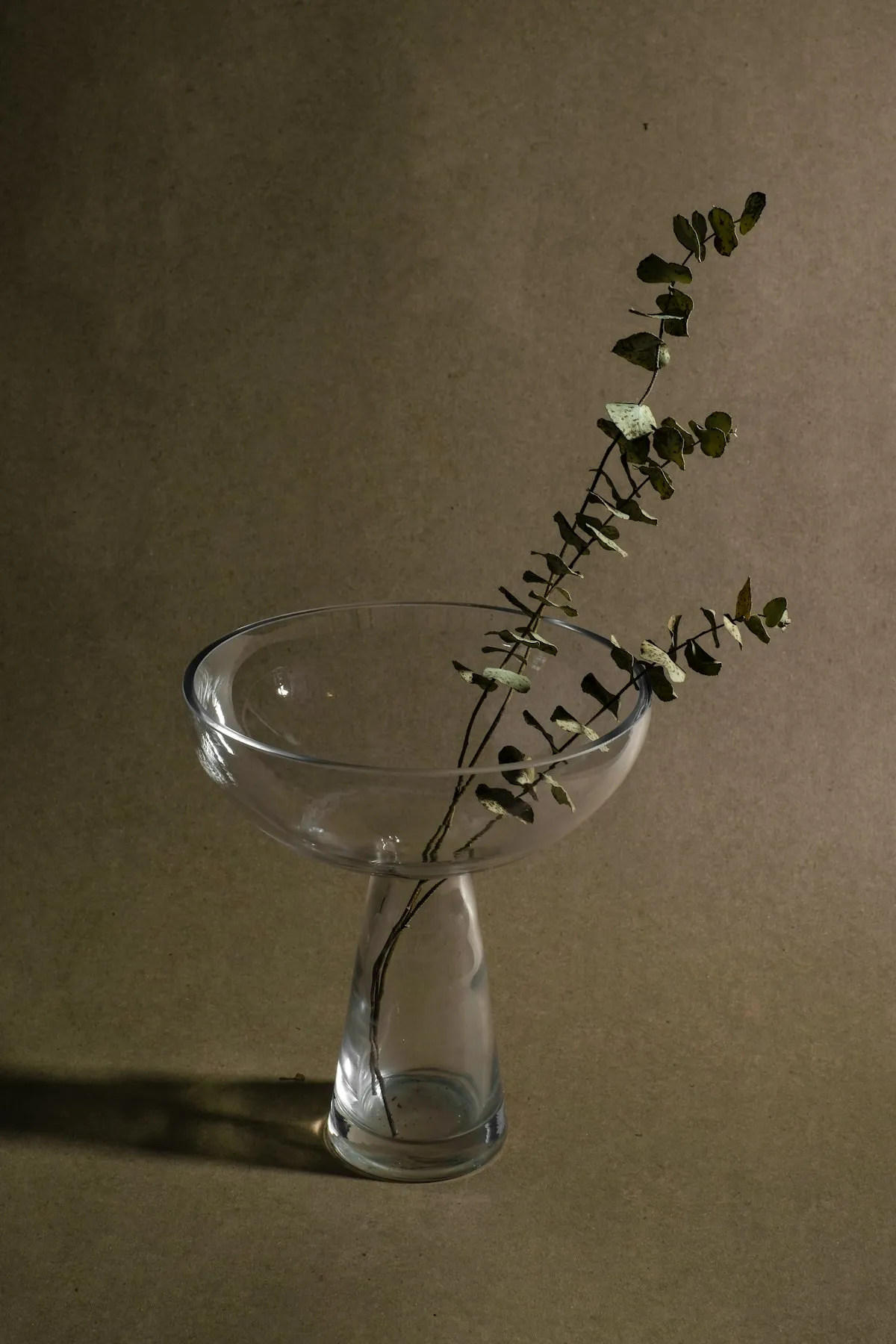
Almost all vase advice is written for arrangements built by a professional florist. Most flowers in most homes are a bunch grabbed on the way back from the shops, unwrapped over the sink, and shoved into whatever is tall enough.
This is for the second case, which is to say: for nearly everybody.
The one-and-a-half rule
The only proportion rule worth memorising: the arrangement should stand about one and a half times the height of the vase.
Taller and it looks top-heavy and precarious. Shorter and the vase dominates, which is fine if the vase is the point and wrong if the flowers are.
Working backwards from what you buy:
| Your flowers | Stem length | Vase height |
|---|---|---|
| Supermarket bunch | 40–50 cm | 25–30 cm |
| Long-stem roses, delphinium | 60–70 cm | 40–45 cm |
| Tulips, daffodils | 30–35 cm | 18–22 cm |
| Single stems, sprigs | 15–25 cm | 10–15 cm |
And yes — cut the stems to fit the vase. It feels wasteful the first time and stops feeling that way immediately afterwards.
Shape follows flower
Tall and narrow suits stems that want to stand up: delphinium, gladioli, branches. The narrow neck holds them upright without a frog or tape.
Wide and low is for mass rather than height — hydrangea, peonies, a dozen tulips allowed to fall outward as they open over the week. Tulips are worth a warning: they keep growing after cutting and keep turning toward the light, so give them room to misbehave. They will anyway.
Small bud vases are for the leftover stems, and they are the most underrated object in the house. One stem, one vase, repeated down a table, beats a single large arrangement at a dinner party for the simple reason that guests can see each other over the top of them.
Why clear glass, specifically
Because stems are part of the arrangement. A clear vase shows the line of the stems through the water, which is most of what makes tulips and alliums look good. An opaque vase throws that away and leaves you with a bouquet sitting on a cylinder.
The trade-off is that clear glass shows everything, cloudy water included. Change it every couple of days. It roughly doubles how long the flowers last and makes the problem disappear.
Keeping clear glass clear
The white ring left by hard water is limescale, and scrubbing it scratches the glass, which makes the next ring worse.
Instead: fill with warm water, add a tablespoon of uncooked rice and a splash of white vinegar, cover, and swirl for thirty seconds. The rice reaches the inside curve where no brush fits, and the vinegar dissolves the scale. Rinse well.
For a narrow neck where even that cannot reach, drop a denture tablet into warm water and leave it overnight. Faintly ridiculous, completely effective.