
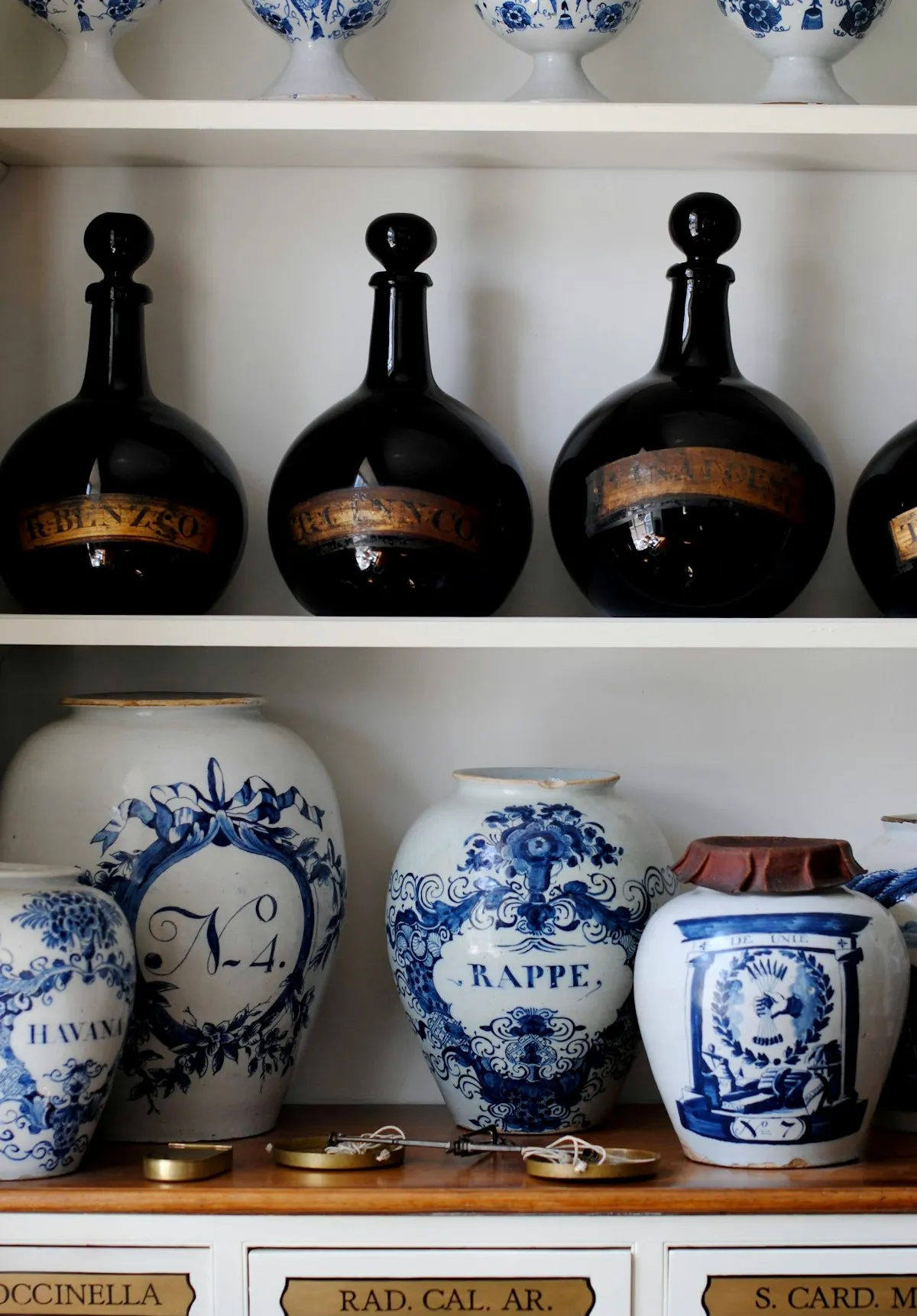
We called them sweet jars because that is what people search for. Then we started reading the reviews properly, and it turns out most of them never see a sweet in their lives.
Here is where they actually end up.
1. The bathroom
The most common use after confectionery, and the one where clear glass really earns its keep. Cotton wool, bath salts, rolled flannels, soap. A mid-size jar holds about a month of cotton pads and quietly turns a consumable into something worth looking at.
Keep it away from a steamy shower if the lid is ground glass — repeated condensation in the ground joint will eventually make it stick.
2. Open kitchen shelving
Decanting is a chore exactly once. After that, a shelf of pasta, rice, lentils and coffee beans in matched glass does more for a kitchen than almost anything else you could spend the same money on.
Use a graduated set here rather than statement pieces — the point is uniformity. And decant only what you use often enough to finish; a jar of something going stale is worse than the packet it came in.
3. The hallway catch-all
Keys, sunglasses, the small change that accumulates in coat pockets. One large jar by the door, lid off. It is a bowl with sides high enough that things stop migrating.
4. Seashells, and other evidence of holidays
This one turns up in our reviews more than anything else, and it is comfortably our favourite. Twenty years of beaches in one jar on a windowsill — shells, sea glass, a few good pebbles. It needs no arranging whatsoever and it gets better every summer.
5. Seasonal, without buying decorations
Fill a large clear jar with pine cones in November, baubles in December, dyed eggs at Easter, conkers in autumn. The jar stays; the contents change. This is considerably cheaper than seasonal décor and looks better than most of it.
6. Dried botanicals
Lavender, hydrangea heads, wheat, eucalyptus. A tall jar with the lid off, stems loose. Dried flowers are fragile and dust-collecting in the open — inside glass they stay intact for years.
7. Empty
Genuinely. A well-made piece of clear glass with real weight and a hand-formed lip is an object in its own right, and a large jar standing empty on a sideboard reads as deliberate rather than unfinished.
This is also the honest test of whether a jar is worth buying. Fill it and almost anything looks fine. Leave it empty and only the good ones survive.
One practical note
Whatever goes in, do not store anything oily in a jar with a ground-glass lid. Oil wicks into the ground joint and the lid seizes solid. Please do not ask how we know this.